
The Best Paver Options For Your Patio In Phoenix
The Best Paver Options For Your Patio In Phoenix
Paver Options For Your Patio Installation In Phoenix
There are many popular paver patio options available for installation in Phoenix, Arizona. Options range from concrete to travertine, limestone to granite. Here is a breakdown of all the popular options, and their pros and cons.
Concrete Pavers
Concrete pavers are a popular choice for homeowners. They are man-made from cement, sand, and gravel. Concrete pavers are molded together under pressure and cured for strength.
Concrete pavers are versatile and budget-friendly. These affordable pavers come in many shapes, sizes, and colors, making them versatile and budget-friendly. They are designed to mimic the look of natural stone while offering uniformity and versatility.
Concrete pavers are one of the most popular materials for patios, walkways, and driveways.

Pros Of Concrete Pavers
- Concrete pavers are more cost-effective and affordable than natural stone, like granite or sandstone.
- There is a wide variety of colors, shapes, and styles to choose from.
- Concrete pavers are durable and can handle heavy use and traffic.
- Light-colored concrete pavers reflect heat more effectively than darker options, making them a better choice for the hot Arizona climate.
- Concrete pavers are easy to replace, as they can be removed and replaced individually.
Cons Of Concrete Pavers
- A common disadvantage of concrete pavers is that the color pigment fades over time. This is due to the intense sun’s rays.
- Concrete pavers lack the unique variation and luxury of natural stone. It lacks the natural aesthetic.
- Concrete pavers are prone to staining, and sealing helps prevent this from happening. This regular maintenance may be required periodically throughout the year.
- While concrete pavers are strong, it is not as long-lasting as other options, such as granite pavers.
Travertine
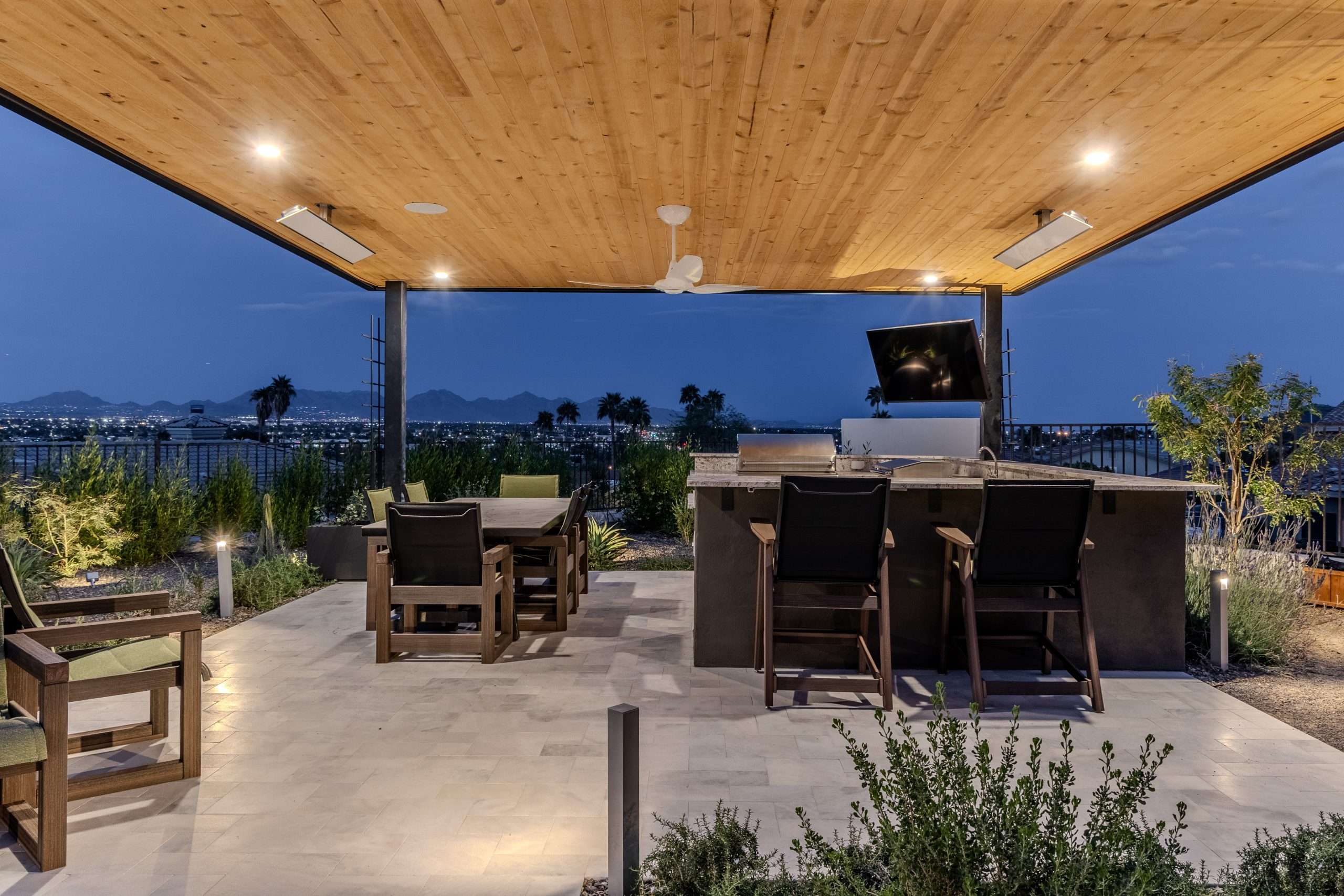
Travertine is made from natural limestone. It is formed from a type of limestone deposited by mineral springs, often hot springs. The limestone is then cut into tiles or pavers and finished in various textures.
Travertine is well known for its earthy tones, natural variation, and porous texture that gives off a timeless, elegant look to your patio area.
Travertine is also great by the pool. Travertine remains relatively cool underfoot and has an upscale look to it.
This combination of factors makes it ideal for upmarket or luxury patios or pool sides.
Pros Of Travertine Pavers
- The best feature of travertine is its natural ability to stay cooler underfoot than many other options. This is beneficial for the Phoenix climate.
- Due to travertine’s porous texture, it provides a grip in wet conditions. This is especially great around pools.
- Travertine offers an elegant look and feel to your outdoor areas.
- Travertine is durable, resistant to cracking and weathering when properly installed.
- The material is 100% natural and eco-friendly.
Cons Of Travertine Pavers
- Travertine is more expensive than concrete or brick pavers.
- Due to its porous nature, Travertine requires regular sealing to prevent staining and water absorption. Periodic sealing also preserves its look and longevity.
- Some shades may lighten the pavers in the intense sun.
Flagstone
Flagstone is a flat, natural stone commonly used for patios, walkways, and other outdoor areas around the house. Whilst flagstone doesn’t refer to a single rock type but rather a category of sedimentary stone, such as sandstone, slate, or limestone. The stone is naturally split into thin, flat layers, making it perfect for paving.
Flagstone pavers aren’t manufactured like concrete or brick pavers. The stone is quarried directly from the earth. The large stone slabs are cut and split along their natural layers, then trimmed into either irregular or rectangular pieces.
Being a natural product, each piece has unique colours, textures, and patterns, giving it a one-of-a-kind look and feel.

Pros Of Flagstone Pavers
- One of the best features of flagstone is its natural beauty. It offers a rustic, organic look that blends in well with the desert-like landscapes of Arizona.
- The lighter varieties of flagstone stay cooler in the hot Phoenix sun, making it a better choice during the hot summer days.
- Flagstone can withstand heavy foot traffic and lasts for decades.
- Flagstone is also a slip-resistant surface as the naturally textured material provides traction even in wet conditions. As a result, it is safe on patios, around pools, and even on walkways.
- Flagstone is unique; no one piece is the same. This adds character and charm to your outdoor area.
Cons Of Flagstone Pavers
- The primary disadvantage of flagstone pavers is their high cost. It is more expensive than concrete pavers due to quarrying, transport, and labour-intensive installation.
- Flagstone pavers are more challenging to install, as they come in various shapes and sizes and require more skill.
- Flagstone pavers require regular sealing to resist stains and weathering as they can erode over time.
- Flagstone is an uneven surface. The natural variation can create gaps and uneven spots if not installed carefully.

Sandstone
Sandstone is made from natural sedimentary rock and is composed of sand-sized mineral particles such as quartz and feldspar. Sandstone naturally forms over millions of years as layers of sand are compacted and “cemented” together by minerals such as silica, calcite, or iron oxides.
Sandstone pavers are quarried in large blocks of natural sandstone. They are then cut into slabs and finished into pavers.
Sandstone is often found in light colours such as cream or beige shades. The colours are dependent on the minerals in it.
The light colours reflect heat, helping to stay cool under direct sun, making it a comfortable choice during the hot summer months in Phoenix.
Pros Of Sandstone Pavers
- Sandstone stays cool underfoot, as lighter-colored stone reflects heat, making it comfortable in hot climates.
- Sandstone offers a natural beauty through its warm, earthy tones.
- Sandstone is durable and strong enough to handle heavy foot traffic when correctly installed.
- Sandstone is naturally textured, making it slip-resistant in the wet.
- Sandstone is a versatile material that can work for patios, pool decks, pathways, and garden areas.
Cons Of Sandstone Pavers
- Sandstone is a porous material, more porous than stones like granite or travertine, meaning it can absorb water and potentially stain the stone. This makes sealing a requirement. Maintenance typically involves regular sealing to protect against moisture, stains, and erosion of the pavers.
- Sandstone is prone to weathering as the softer varieties can wear down if exposed to very heavy use.
- Sandstone is more expensive than concrete, but is less costly than marble or travertine.
Limestone
Limestone is a sedimentary rock primarily made of calcium carbonate, formed from the remains of marine organisms and shells compacted over millions of years.
It is commonly used in construction and landscaping because of its texture, muted colours, and durability.
Limestone is also quarried from the earth. The large blocks of limestone are cut into slabs or shaped into pavers.
Depending on the finishing process of the pavers, limestone can be smooth, rustic, or aged and textured to be slip-resistant.
The natural colours include cream, beige, grey, and light tan.

Pros Of Limestone Pavers
- The best feature of limestone is its elegant appearance. The smooth texture and neutral tones give a refined, timeless look.
- Limestone pavers are cool underfoot due to the light colors not absorbing heat, making them a great choice for the hot summers in Phoenix.
- Limestone is strong and durable, holding up well to heavy foot traffic and is slip-resistant when wet.
- Limestone is a versatile material that can be used in modern and traditional designs, inside and outside.
Cons Of Limestone Pavers
- Limestone is porous in nature, meaning it absorbs water and stains easily, requiring it to be regularly sealed. The regular sealing is required maintenance as it also protects the limestone from weathering.
- Limestone is also softer than other paver options, meaning it is more prone to scratching and erosion.
- Limestone is more expensive than concrete and sandstones, but less expensive than marble or high-grade travertine.

Granite
Granite is a natural igneous rock formed from cooled magma deep within the Earth. It is composed of minerals such as quartz, feldspar, and mica, giving it a speckled appearance and extreme hardness. Granite is often used in high-traffic areas due to its exceptional strength.
Granite is considered a premium material and is only used on high-end installations.
Much like the other natural pavers, granite pavers are quarried in large blocks and then cut into smaller units. It is then split into uniform sizes and finished in different textures. Textures include polished, rough, and textured.
The color choices can range from grey, black, pink, and speckled mixes.
Pros Of Granite Pavers
- Granite is extremely durable and one of the hardest natural stones. It is also resistant to chips, scratches, and heavy wear.
- Granite is weather-resistant.
- Granite is low-maintenance and doesn’t erode easily. It does require regular sealing, though.
- Granite pavers have a high-end finish that stands out.
- Granite is a versatile stone that can be used on patios, walkways, and commercial spaces.
Cons Of Granite Pavers
- Granite is extremely slippery when smooth. Textured finishes are the best for outdoor safety reasons.
- Granite is heavy and hard to cut, requiring skilled technicians for the installation.
- The dark coloured granite absorbs and holds heat, making it incredibly hot in summer.
- Granite is more expensive than concrete, sandstone, and even travertine options.
Brick (Clay) Pavers
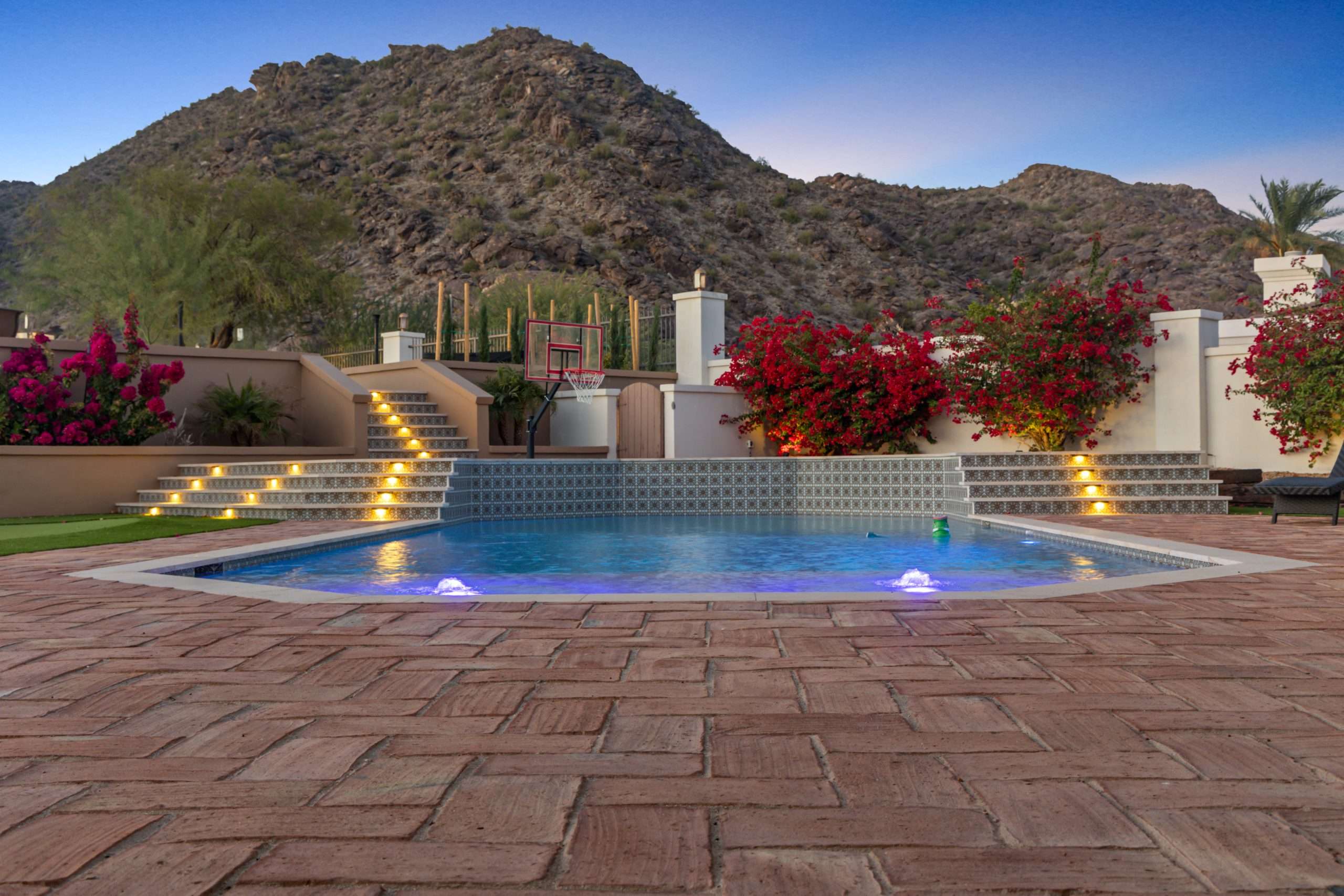
Brick pavers are made from natural clay. The clay is molded into rectangular blocks and baked at high temperatures. These bricks give a timeless look and hold up well in the heat.
They have been used for centuries in walkways and on streets.
They can, however, fade and crack over time. They also get very hot on hot days as they absorb heat.
Please keep this in mind.
Like many paver options, bricks have a classic appeal, and they are durable when installed correctly. Here are some of the pros and cons of brick pavers.
Pros Of Brick Pavers
- Bricks are durable and strong. They can withstand heavy loads and last for decades.
- It doesn’t fade as easily as other options.
- Bricks offer a classic look with a traditional rustic charm.
- They are natural, recyclable, and eco-friendly.
- Bricks are easy to clean and repair by replacing the damaged individual bricks.
Cons Of Brick Pavers
- Brick pavers have fewer design options compared to concrete or stone pavers. They have limited design versatility.
- Bricks can chip and crack over time.
- Bricks are usually more expensive than concrete pavers
- Bricks offer installation challenges as they are harder to cut and shape during installation.
- Bricks can get very hot in summer as they absorb heat, making it unpleasant when barefoot.
Conclusion
There are many popular paver choices for patio areas. Each paver has its own best uses and pros and cons. Popular choices range from concrete, brick, and natural stone variations and brick. Which paver is your favorite?
If you need an outdoor design company or a patio installed in the Phoenix area, please contact us today.


