
Pros and Cons of Travertine Patios
Pros and Cons of Travertine Patios
Pros and Cons of Travertine Patios
Whilst we have touched on the pros and cons of travertine before, we thought it would be beneficial to focus this post solely on using travertine for patio areas. Travertine patios are one of the most common requests we have from clients. Why? Travertine is one of the most visually appealing materials that exists; it is durable and timeless, but it does have a few drawbacks.
Here are the pros and cons of travertine patios.
Pros Of Travertine Patios
There are many reasons why you would opt for a travertine patio area. Here are the 7 best reasons to opt for them.
Aesthetically Pleasing, Timeless Appearance
Travertine offers an aesthetically pleasing look and feel to your patio area.
The material offers a warm, natural look that exudes a timeless appearance, offering a very different feel from using brick pavers or concrete pavers.
Travertine also complements various architectural styles, ensuring your patio blends in with your yard.

Travertine Patios Are Durable, With A Long Lifespan
Travertine can often last anywhere between 50 and 100 years. Travertine is a durable, long-lasting material that is resistant to chipping, cracking, and general wear and tear.
Travertine can handle temperature fluctuations and foot traffic with ease. This makes travertine a great solution for patios, walkways, and entrances. It does, however, require regular maintenance, but we will discuss that later.
Slip-Resistant Surface (If Not Polished)
Travertine is a slip-resistant surface. Being naturally porous, it makes for a slip-resistant surface, even when wet. This surface not only works great for patio areas, but also works well around the pool.
Just a note on the non-slip feature, the surface shouldn’t be polished. If the surface is honed, tumbled, or brushed, it will be slip-resistant as the polishing makes the surface smooth as glass. A definite no-no when you have wet shoes or feet.

Naturally Cooling As It Reflects Heat
Travertine is naturally cooling and reflects much of the heat from the sun’s rays. Travertine stays cool underfoot, making it comfortable to walk on during the hot summer days. Much of this has to do with the limestone material, but also the color of the stone itself.
Travertine is a light colored stone, making it reflective to the sun’s rays. The color availability is usually tan, cream, and white.
Eco-Friendly
Travertine is a naturally occurring stone that requires minimal processing. Formed from mineral deposits, this stone is great for homeowners who are looking for an eco-friendly alternative to concrete pavers.
Travertine also gives off a rustic, natural look to the area. It is really a great option!
Versatile Material
Travertine is a versatile material. It can be easily cut and shaped during the installation process. Due to the nature of travertine, it has a wide range of applications. As we know, travertine can be used for your patio area, walkways, featured walls, and much more.
Travertine is a great material for patios as it can blend into any landscape project.
Naturally Porous
Travertine is a naturally porous material. Travertine easily allows water to drain through it. Travertine‘s self-draining characteristics are excellent around the pool or for draining away those summer rain showers.
It is worth noting that premium-grade travertine is less porous and denser than less expensive options. Keep this in mind.
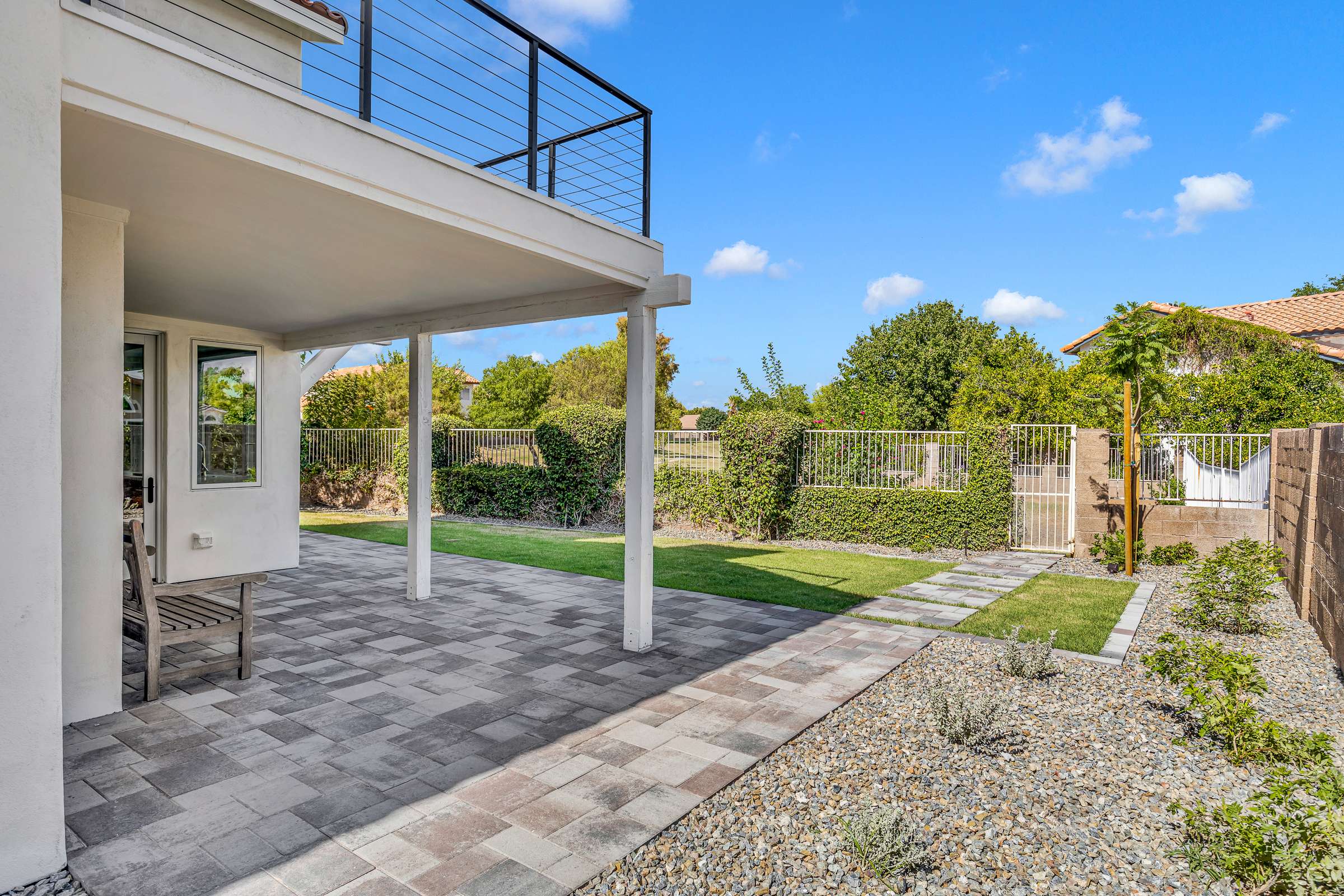
Cons Of Travertine Patios
Much like any hardscaping material, there are disadvantages to using travertine pavers and tiles for your patio area. The biggest problems with having a travertine patio are the cost and porous nature of the material. Here are the biggest disadvantages of having a travertine patio.
Porous Nature
Travertine inherently is a porous material that can absorb liquids and stains. This can lead to numerous problems. Travertine can easily absorb a liquid that can stain the stone, making cleaning it a problem. This is because the surface isn’t the only thing that is stained.
As a result, it is the most common issue to arise; you are required to regularly seal the stone to prevent this from happening. Sealing the travertine will prevent the spills and dirt from damaging the finish.
If you live in an area where it gets extremely cold overnight with sudden drops in temperature, you may encounter the next problem.

Freeze And Thaw Damage
Whilst this isn’t as much an issue for homeowners in Phoenix, AZ, it is for other parts of the country. Due to travertine’s porous nature, it absorbs water.
Overnight, rapid temperature drops can cause the water to freeze.
The frozen water expands when freezing, causing microscopic cracks in the travertine. Over time, the travertine cracks and needs replacing.
This is why sealing is so important.
Requires Ongoing Sealing And Maintenance
As mentioned above, sealing is important and should be part of your regular cleaning and maintenance schedule.
To extend and maintain the lifespan of the travertine, the travertine patio requires regular cleaning with pH-neutral cleaning products. Always thoroughly rinse any residue away. Also, be careful not to scratch the surface when cleaning.
Finally, after a deep clean, you should seal the travertine patio. A travertine patio may require sealing every 2-5 years, depending on the amount of wear it sustains through foot traffic and general wear and tear.
Costly Material To Install
Travertine is an expensive material. The material itself either has a mid-range price point or is on the high-cost side of things. This comes down to the material quality. Premium-grade travertine is a more expensive product and is also more durable.
Another factor is that because it is so heavy, it requires specialist equipment to install, and the installers also need to be specially trained to do the installation.
Fewer Replacement Options
With travertine, you have fewer replacement options. In the event that your travertine patio starts to develop natural holes, the stone can be filled. The problem comes in when trying to find the exact color match. Replacing travertine is also difficult due to the different hues, shades, and patterns of each paver.
Because of all the differences between the stones and where they are sourced, you may never find an exact match, much like tiling.
Vulnerability To Acids
Acidic substances such as lemon juice or vinegar can cause permanent damage to the travertine. Acidic substances will etch their way into the stone if not immediately washed away with pH-neutral cleaners and thoroughly rinsed away.

Being vulnerable to acids is another reason why regular maintenance and cleaning are important. Sealing the travertine prevents the acidic liquids from seeping into the stone and etching the surface.
Once again, always ensure your travertine patio is sealed.
Conclusion
There you have the pros and cons of travertine patios. As we mentioned, travertine is a great, timeless, and classic option for homeowners. Many of the issues that arise with travertine patios are due to their regular maintenance and sealing needs. Although this material is a very popular choice, let us know what you think.
If you need backyard design company or a patio installed in the Phoenix area, please contact us today.


