
Pros And Cons Of Decomposed Granite In Landscaping
Pros And Cons Of Decomposed Granite In Landscaping
Pros And Cons Of Decomposed Granite In Landscaping
There are many pros and cons to using decomposed granite in landscaping. Decomposed granite is incredibly versatile and suits a natural and rustic feel. It is also great for xeriscaping. These are the pros and cons of decomposed granite in landscaping.

Types Of Decomposed Granite Used In Landscaping Projects
Before getting into the pros and cons, there are 3 types of decomposed granite used in landscaping. These are loose decomposed granite, stabilized granite, and resin-coated decomposed granite.
Lose Decomposed Granite
Lose decomposed granite is a natural, cost-effective material consisting of granite particles in a variety of sizes. Lose decomposed granite is a great option for garden paths, xeriscaping, and patio areas. They are also commonly used as ground cover around flowerbeds or in areas under trees where grass won’t grow.
Lose decomposed granite offers excellent drainage, a great aesthetic, and a crunchy texture underfoot when walking.
Stabilized Decomposed Granite
Stabilized decomposed granite is a durable landscaping material with porous properties. This material is made by combining organic and inorganic binding agents together with the decomposed granite, making it a natural-looking surface often used for walkways, patios, and other low-traffic surfaces.
Resin-Coated Decomposed Granite
Resin-coated decomposed granite is a durable, low-maintenance landscaping material that is created with a resin binder. It provides a natural look, is suitable for high-traffic areas like driveways, has superior stability to other options, and is resistant to erosion from heavy rains. This is commonly used on steep slopes and driveways.
What Is The Difference Between Stabilized And Resin-Coated Decomposed Granite?
There are fundamental differences between stabilized decomposed granite and resin-coated decomposed granite. Their main difference is in the application and the durability. Stabilized Decomposed Granite uses organic and inorganic binders to create a firm, porous surface that allows moisture to pass through it. Resin-coated decomposed granite provides a durable, high-strength, rigid surface for heavy traffic use or on steep slopes. A great example would be resin-coated driveways and stabilized decomposed granite walkways in your yard.

Pros Of Using Decomposed Granite In Landscaping
There are many advantages to using decomposed granite in landscaping that extend beyond its aesthetic appeal and practicality for xeriscaping. These are the most common benefits of using decomposed granite in landscaping.
Natural Appearance
The natural appearance of decomposed granite is a key factor in its selection. The look and feel of it in your yard makes it a great aesthetic choice for homeowners.
Cost Effective
Decomposed granite is a cost-effective material for homeowners. The inexpensive nature makes it a great solution around flowerbeds and walkways. It is also inexpensive to top up the areas with more granite when necessary.
Low Maintenance
Decomposed granite is a great low-maintenance solution. Whilst not “no maintenance”, periodically ensuring the weeds are removed, granite is topped up in areas, and the debris is removed regularly, it is indeed a low-maintenance option.
Environmentally Friendly
Decomposed granite is a natural, environmentally friendly material suitable for many landscaping projects. It is a firm favourite amongst xeriscaping projects as the look complements the yard’s environment.
Material Versatility
Decomposed granite is a highly versatile material that can be used in many applications, namely, patios, driveways, xeriscaping projects, walkways and paths, and also playground areas.
Improves Drainage
The porous nature of decomposed granite and the stones make it a great option for drainage reasons. They allow water to filter away from the ground surface, reducing the risk of water pooling in your yard, causing pests like insects to breed.
Cons Of Using Decomposed Granite In Landscaping
There are some disadvantages when it comes to decomposed granite. Here are some of the most common issues that can arise.
Stability And Accessibility Issues
A major disadvantage of decomposed granite is stability and accessibility issues. If you struggle to talk, have balance or mobility issues, this is not the right solution for you. Stabilized granite and resin-coated granite may be a better option than loose granite, but you might just be better off with some sort of concrete option.
Compaction May Occur
Much like settling and shifting, compaction can occur. This is usually because the base layer hasn’t been compacted correctly. The best option is, unfortunately, to redo the section to ensure it doesn’t become a trip and fall hazard.

Can Become Dusty
Decomposed granite can become dusty when installed. This is especially the case if the wind picks up. The dust may wash away with the rain, but until then, you may want to periodically wash the granite down to remove the dust.
Shifting And Settling
Much like compaction issues, shifting and settling may occur. Sometimes it is due to bad prep, but that depends more on how bad it is. Just be aware that shifting and settling may occur.
Erosion With Heavy Rain
With heavy rainfall, you can expect a certain amount of erosion. Keep this in mind when deciding on decomposed granite if you live in heavy rainfall areas.
Requires Proper Installation
Stabilized and resin-coated granite patios, walkways, and driveways may require proper and specialized installation. The loose granite options can be DIY, but the other two require specialized installation.
Maintenance Tips For Decomposed Granite In Landscaping
Decomposed Granite walkways, driveways, and patios require basic ongoing maintenance. Depending on the type of decomposed granite, some may require slightly more maintenance than others. This is also application-dependent.
Keep The Surface Free From Debris
You will want to keep the surface free from debris. A leaf blower or broom may be sufficient to maintain a clean surface. Just be aware that if you aggressively blow loose decomposed granite, it might “go flying”. Please be wary of the people around you and your surroundings.
Monitor And Remove Weeds
You are going to need to monitor weed growth on your paths and walkways, as well as around your flowerbeds. This is mainly the concern for loose and perhaps stabilized granite areas, as you may get weeds pushing through. This is less of a concern for resin-coated decomposed granite, as it is a solid surface.
Remove Stains From The Driveway
Oil leaks and stains should be removed as soon as possible. The method of cleaning the surface depends on the stain. For the most part, oil-based stains can be removed with baking soda and water. This is mixed in a paste and applied to the surface, and then wiped away. You may find that resin-coated driveways may be able to withstand a degreaser and pressure washer for cleaning. Heavy cleaning may require resealing afterwards. You may want to exercise caution around aggressive cleaners.
Monitor Water Damage From Inadequate Drainage
Water damage and drainage issues can arise over time. Water damage can cause a crumbling of the foundation layers, cause erosion, and also block the ability of the decomposed granite to drain away water from heavy rains.
Monitoring this issue in heavy rainfall regions would be a great idea as a measure of preventing water damage issues from arising.
Add More Granite When Needed
Lose decomposed granite will need to be periodically replenished on occasion. This is due to environmental factors such as wind and rain, as well as people walking over the granite. Periodically topping up the granite will keep the surface looking good.
Uses And Applications Of Decomposed Granite In Landscaping Projects
There are many uses and applications for decomposed granite in landscaping projects. These are the most popular uses and applications our clients seek out.
Patios
Using decomposed granite for your patio area is a popular choice among homeowners. Patios thrive with either stabilized or resin-coated decomposed granite as the surface layer. If you don’t expect a lot of foot traffic and do get plenty of rainfall, you may opt for stabilized decomposed granite as a great option. This option will handle the foot traffic and rainfall drainage. Otherwise, you may be better off with resin-coated decomposed granite for your patio area.

Driveways
Decomposed granite driveways are great for homeowners who appreciate the natural, rustic look of this xeriscaping option. Driveways should be used with resin-coated decomposed granite. The surface is incredibly strong and hardwearing, allowing heavy foot traffic and vehicles to be parked on it without easily deteriorating the surface. It is worth noting that any oil spills should be cleaned as soon as possible to prevent staining.
Xeriscaping
Decomposed granite is a great choice for xeriscaping projects. Xeriscaping is a sustainable, water-efficient landscaping method popular in hot arid regions. Lose Decomposed Granite is often used in flowerbeds and around the garden to absorb moisture and reduce the rate of evaporation from the heat. This aids in ensuring the flowerbeds get sufficient water from the irrigation system.
Walkways And Paths
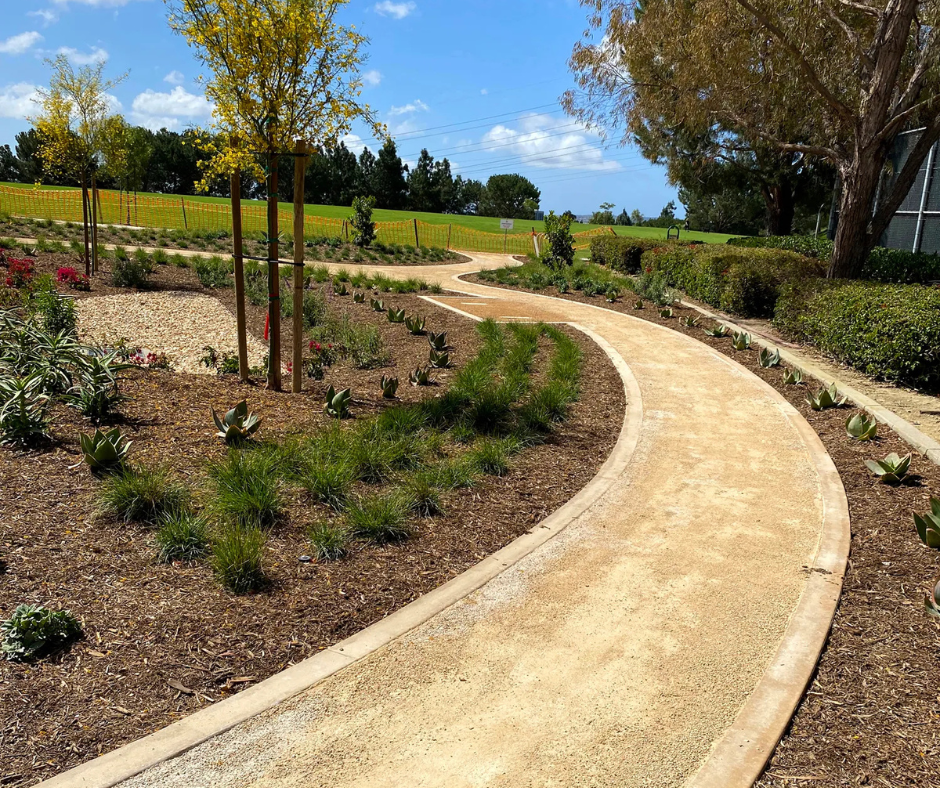
Decomposed granite is a great option when building a walkway or a path. Depending on your needs, you can opt for loose, stabilized, or resin-coated decomposed granite. There are pros and cons to each option. Stabilized and resin-coated decomposed granite walkways may require less maintenance but are more “solid” and stable underfoot when walking. If you appreciate the sound of the crushing granite underfoot when walking, you may prefer to opt for loose granite.
Playground Areas
Playground areas are great choices for loose decomposed granite. They are great around play areas, and you should opt for a finer choice of decomposed granite for this application.
FAQ
Do I Need Landscape Fabric Under Decomposed Granite?
Yes, you do need landscape fabric under decomposed gravel. While it may not seem “strictly necessary”, it is recommended. You will want to opt for a professional-grade, non-woven geotextile fabric under your decomposed granite. This will prevent the decomposed gravel from sinking into the soil and also improve stability underfoot when watering on pathways or walkways. The geotextile landscape fabric also serves as a separation layer between the soil and the decomposed granite, providing improved drainage and enhanced structural integrity.
What Are The Problems With Decomposed Granite?
Several issues can arise when using decomposed granite in landscaping projects. Many can be caused by improper installation or environmental concerns.
Stability and Erosion – decomposed granite tends to shift underfoot when walking. You will also find that problems may arise during heavy rain periods that cause erosion issues. Decomposed granite may wash away during heavy rains.
Drainage and Moisture – drainage and moisture issues may arise if the installation isn’t done correctly. The decomposed granite may hold onto water and stop it from draining, leading to a muddy mess instead of a beautiful walkway.
Weed Growth – Weeds can still grow through decomposed gravel. This is the case when the granite hasn’t been installed or maintained correctly.
These are the main problems you may find when having decomposed granite installed in your yard. As mentioned above, this largely comes down to proper installation.
Is Decomposed Granite Good For Landscaping?
Decomposed granite is a great material for landscaping projects. It is a versatile and practical material that has various uses and applications, making it a firm favourite for homeowners who want a natural, rustic look to their yard. You will commonly find that homeowners opt for decomposed granite to enhance the aesthetic of walkways and paths, flower beds, and patio areas. Decomposed granite is an excellent material for natural landscapes and xeriscape options.
Do Weeds Grow Through Decomposed Granite?
Weeds can grow through decomposed granite. Weeds can sprout through the decomposed granite. Keep in mind, this is heavily reduced when the decomposed granite hasn’t been installed correctly. You will want to focus on preparation. This means carefully compacting the base and possibly spraying weed killer to kill off any remaining weeds. Following that, you should lay a professional-grade, non-woven geotextile fabric under the decomposed granite. You may find that regular maintenance helps you manage the weeds better.
How Long Does Decomposed Granite Last?
Decomposed granite has a long lifespan. With proper installation, the lifespan is around 10 years. Various factors, like heavy rainfall, foot traffic, and maintenance, will affect the lifespan. Whether it be a patio area, a walkway, or flowerbeds, you can expect approximately a 10-year lifespan of decomposed granite.
Conclusion
Those were the pros and cons of decomposed granite in landscaping. Decomposed granite is a great solution for xeriscaping yards and homeowners who enjoy the rustic, tranquil vibe of decomposed granite. What are your thoughts on this versatile material?
If you need a landscape design firm to install decomposed granite in the Phoenix area, please contact us today.


