
How To Choose The Best Driveway Material For Your Home
How To Choose The Best Driveway Material For Your Home
How To Choose The Best Driveway Material For Your Home
Choosing the best driveway material for your home involves taking numerous factors into account, such as your budget, the durability and lifespan, maintenance requirements, and the local climate.
A driveway should match the hardscaping elements of your front and back yards. Here are the factors that you should consider when choosing your driveway material.
Factors To Consider When Choosing A Driveway Material
There are a variety of factors that you should consider when choosing a material for your driveway. These factors include your budget, durability of the driveway, functionality, and maintenance are examples.
Here Is A List Of The Factors To Consider:
Determine Your Budget For Materials And Installation Costs
While there are many different ways to finance your driveway remodel project, it is always best to stick to your budget. Allocating a budget to materials and installation costs, along with any unforeseen expenses that may occur, should be the very start of the project.
Different materials have different costs and require different forms of preparation, affecting the installation cost. If your budget is tight, you might want to opt for lower-cost materials, but you shouldn’t try to cut costs on a professional installer.
Durability And Lifespan
Another factor to consider is the lifespan of the material and its durability. Certain materials last 20 years, others may last as much as 40-60 years. Having a long-lasting material would be ideal in most cases. The last thing anyone needs is a driveway rebuilt every few years.
Functionality
The physical function of the driveway is also an overlooked factor. If you are parking large trucks on your driveway, you may need to ensure the physical driveway is suitable for these vehicles. You may end up with cracks and shifting of the driveway due to settling.
Another function may be to help move water away from the house. In this case, it may be used as a functional drainage system.
Maintenance Requirements
All driveways require some maintenance and upkeep. How much maintenance you would like to do on your driveway is up to you. Gravel driveways are higher maintenance than brick, for example.
Discover Aesthetic Appeal
Another key factor is the curb appeal. You might be asking yourself, How much do I want to impact my curb appeal. Some options, like stone and gravel, may be considered more visually appealing, and enhancing the aesthetic appeal of your drive may be an important factor for you. Consider materials that meet your aesthetic needs.
Environmental Impact
Consider the environmental impact of the materials you are using. Does rainwater drain through the stone? Another “Is the material bad for the environment?” Asphalt releases a considerable amount of greenhouse gases when being produced. Is this a factor worth considering? This is something you may need to think about.
Local Laws And HOA
Local Laws and HOA may also need consideration. From approved materials to requiring the necessary permits, these considerations may make life unnecessarily frustrating. Make sure everything is done by the book to prevent the need to dig everything up again and incur further costs.
The Best Driveway Materials For Your Driveway
Concrete Driveways
Concrete is a popular choice for residential driveways. This is largely due to its strength, clean appearance, and versatility. It is made from a mixture of cement, stone, sand, and water, which hardens into a solid surface. This surface is capable of supporting heavy vehicles and frequent use.
Pros:
Concrete driveways are durable, low-maintenance, and provide the homeowner with a smooth, modern look to their driveway. A concrete driveway resists rutting, handles heavy loads, and can be colored or finished in different ways. This is a visually appealing characteristic that is hard to ignore.

Cons:
Concrete can crack over time. This is due to ground movement or rapid temperature changes. Repairs can be noticeable too. Installation costs are higher than for a simple gravel or asphalt driveway.
Lifespan:
The lifespan of a concrete driveway is typically 30–40 years or longer.
Stamped concrete
Stamped concrete is a decorative version of the standard concrete mentioned above. Stamped concrete is decorated with a pattern and textures to resemble materials such as stone, brick, slate, or tile. It offers the strength of concrete but with a customized and upscale appearance.
Pros:
Stamped concrete provides a high visual impact, complete design flexibility, and increased curb appeal, all without the high cost of natural stone. It is durable and can be sealed to resist stains and weather damage.
Cons:
Stamped concrete requires professional installation. It also requires periodic resealing to maintain its appearance. Cracks can be more noticeable in decorative patterns and may be difficult to match.
Lifespan:
The lifespan of stamped concrete is 20-30 years. This is with proper sealing and care, though.
Asphalt
Asphalt is a widely used residential driveway material that leaves a smooth, dark finish after being laid. It is also affordable. Asphalt is made up of a mixture of aggregates and bitumen, creating a flexible surface that adapts to surface temperature changes and vehicle loads.
Pros:
Asphalt is quick to install, cost-effective, and provides a clean, uniform appearance. It is a great option in most climates, easy to repair, and offers a non-slip surface for homeowners. Asphalt is less prone to cracking than concrete.

Cons:
Asphalt requires regular maintenance. Maintenance includes sealing to prevent cracking and fading over time. It is less durable than concrete and can soften in extreme heat. This might not be the best option in the Arizona heat. It has a shorter lifespan than concrete.
Lifespan:
Asphalt driveways typically last 15-30 years. This is with proper, routine maintenance, though.

Gravel
Gravel driveways are made from loose stones, such as pea gravel, that are compacted together to cover the driveway area. They offer a natural rustic appearance and are popular choices for long driveways or rural homes due to their simplicity and affordability.
Pros:
Gravel is one of the most cost-effective materials that can be used for a driveway. It is also quick to install. These driveways offer excellent drainage, are easy to repair, and work well in areas with frequent ground movement.
Cons:
Gravel driveways are high maintenance. They require raking and replenishing stones. They can also develop ruts, shift over time, and may not be ideal on steep driveways.
Lifespan:
Gravel can last indefinitely with ongoing maintenance.
Bricks
Brick paver driveways are constructed using individual clay or concrete bricks laid together in a pattern over a compacted base. This option offers a classic, timeless look. It is also chosen for its aesthetic appeal and design flexibility.
Pros:
Brick pavers are highly durable, visually attractive, and available in a variety of colors and patterns. Individual bricks can be easily replaced when damaged. The surface also allows for good drainage when properly installed.

Cons:
A brick paver driveway has a higher upfront cost and requires a professional installation. Weeds can also grow between joints if not properly maintained. The surface may also shift if the base is poorly prepared.
Lifespan:
The lifespan of a brick paver driveway is about 25 years or longer.

Pavers
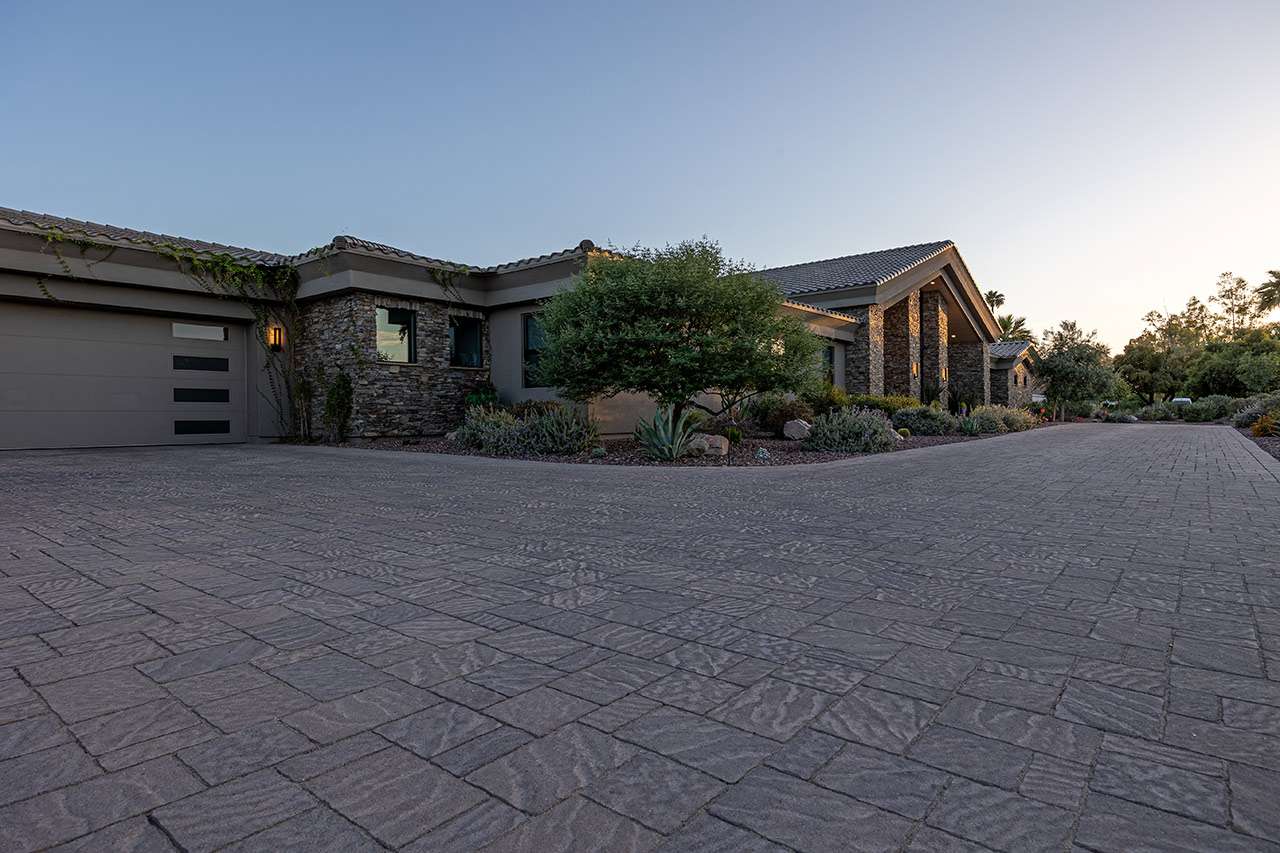
Much like bricks, paver driveways are made from individual interlocking units. These are typically concrete, stone, or composite materials, laid over a compacted base. They offer a versatile, modern look and are available in a wide range of shapes, colors, and textures.
Pros:
Pavers are extremely durable, resistant to cracking, and easy to repair. Each piece can be replaced. They provide excellent drainage, strong load-bearing capacity, and a high level of design flexibility for custom patterns.
Cons:
Paver driveways have a higher initial cost compared to asphalt or concrete surfaces. The installation is labor-intensive, and ongoing maintenance is required.
Lifespan:
The lifespan of a paver driveway is typically 20-25 years.
Turf And Pavers
Turf and paver driveways combine permeable pavers with natural or artificial grass. This creates a green, modern alternative to traditional hard surfaces. The pavers provide structural support while the turf fills the gaps, allowing for drainage and “visual softness”.
Pros:
Turf and pavers offer excellent drainage, reduced heat buildup, and enhance curb appeal. These systems are eco-friendly, help manage stormwater during heavy rains, and can be customizable in residential applications.

Cons:
Installation costs are higher for this driveway application. Base preparation is critical to prevent shifting. Natural turf also requires regular maintenance, and the artificial turf may fade and need replacement over time.
Lifespan:
Natural grass and paver driveways typically last 25-50 years. Artificial turf options require replacement more often than that.

Stone
Stone driveways are built using natural stone materials such as Flagstone, Limestone, or crushed stone over a compacted base. They offer a premium natural appearance and are often used to enhance high-end or traditional properties.
Pros:
Stone driveways are extremely durable, visually distinctive, and provide excellent drainage. Natural stone resists weathering, handles heavy loads well, and adds to long-term value and character to a home.
Cons:
Stone driveways are incredibly expensive. It also requires skilled installers. Uneven surfaces can occur with certain stone types, and repairs may be either time-consuming or costly.
Lifespan:
Stone driveways have a lifespan of 25-50 years when properly installed and maintained.
Cobblestone
Cobblestone driveways are constructed using rounded or squared natural stone. These stones are set in sand or mortar over a solid base. They are well known for their old-world charm and create a distinctive, high-end look that stands out in residential homes.
Pros:
Cobblestone is extremely durable, weather-resistant, and capable of handling heavy vehicle traffic. It offers excellent drainage and has a unique character that is attractive to homeowners. These individual stones can be reset or replaced if needed.

Cons:
Cobblestone driveways are the most expensive option and require expert installation. The uneven surface may be less comfortable to walk on and can make snow removal more challenging.
Lifespan:
Cobblestone driveways can last 50-60 years or more.
Tips For A Successful Driveway
Climate Appropriate Materials
Always opt for climate-appropriate materials. In very cold regions, you may need to opt for non-slip options like gravel. In areas like Phoenix, AZ, an asphalt driveway would get “melting” hot during the summer. Keep this in mind when considering materials.
Plan Your Design
Always carefully plan out your driveway. If you fail to plan, you plan to fail. Decide on what your needs are, what materials you find suitable, and how much you would want to spend. Also, keep in mind that you may need drainage and grading solutions if your driveway is large and is sloped a certain way.
Invest In Quality
Always try to invest in good-quality materials and a professional installer. This would save you money and potential hazards in the long run. Don’t try to cut corners on driveways; it’s not worth it.
Schedule Regular Maintenance
Scheduling regular maintenance to maintain your driveway is key to ensuring the longevity of your driveway. Maintenance may include cleaning, checking for cracks or settlement, sealing the stone, etc. This doesn’t have to be done daily, but periodically throughout the year should ensure your driveway stays great all year round.
Hire A Professional
Always hire a professional to build or replace your driveway. There are many benefits that come with hiring a professional to build or replace your driveway. Besides the fact that they are qualified, handle health and safety, the permitting that is required, and planning of the driveway, you also get peace of mind. Professionals can also guide and advise you as to what to do with your driveway, material-wise. The experience and expertise will pay off in the long run.
FAQs
What Is The Best Material For A Residential Driveway?
The best material is either concrete, stone, asphalt, pavers, or brick. They are popular for a good reason. Most homeowners may opt for brick, pavers, or a form of concrete material for their driveway.
What Type Of Driveway Will Last The Longest?
Paver and brick driveway options will last the longest and be low maintenance, which is an added advantage.
What Type Of Driveway Will Add The Most Value To Your Home
The type of driveway that will add the most value to your home may be an option like cobblestone or a natural stone; otherwise, specialty pavers or stamped concrete may be options. Each option has its own pros and cons.
What Are The Best Non-Slip Driveway Options
Resin-bound gravel is one of the best slip-resistant driveway options. They are great for cold climates, but do require regular maintenance, though.
Conclusion
There you have the best materials you can use for your driveway. Each material has its pros and cons, and most of the time requires skilled installers to ensure proper installation. Our landscape design service allows us to create your dream front yard, and in the process, redesign and build your driveway to spec, increasing the curb appeal and overall value of your home.
If you need landscape construction services in the Phoenix area, please contact us today.


